

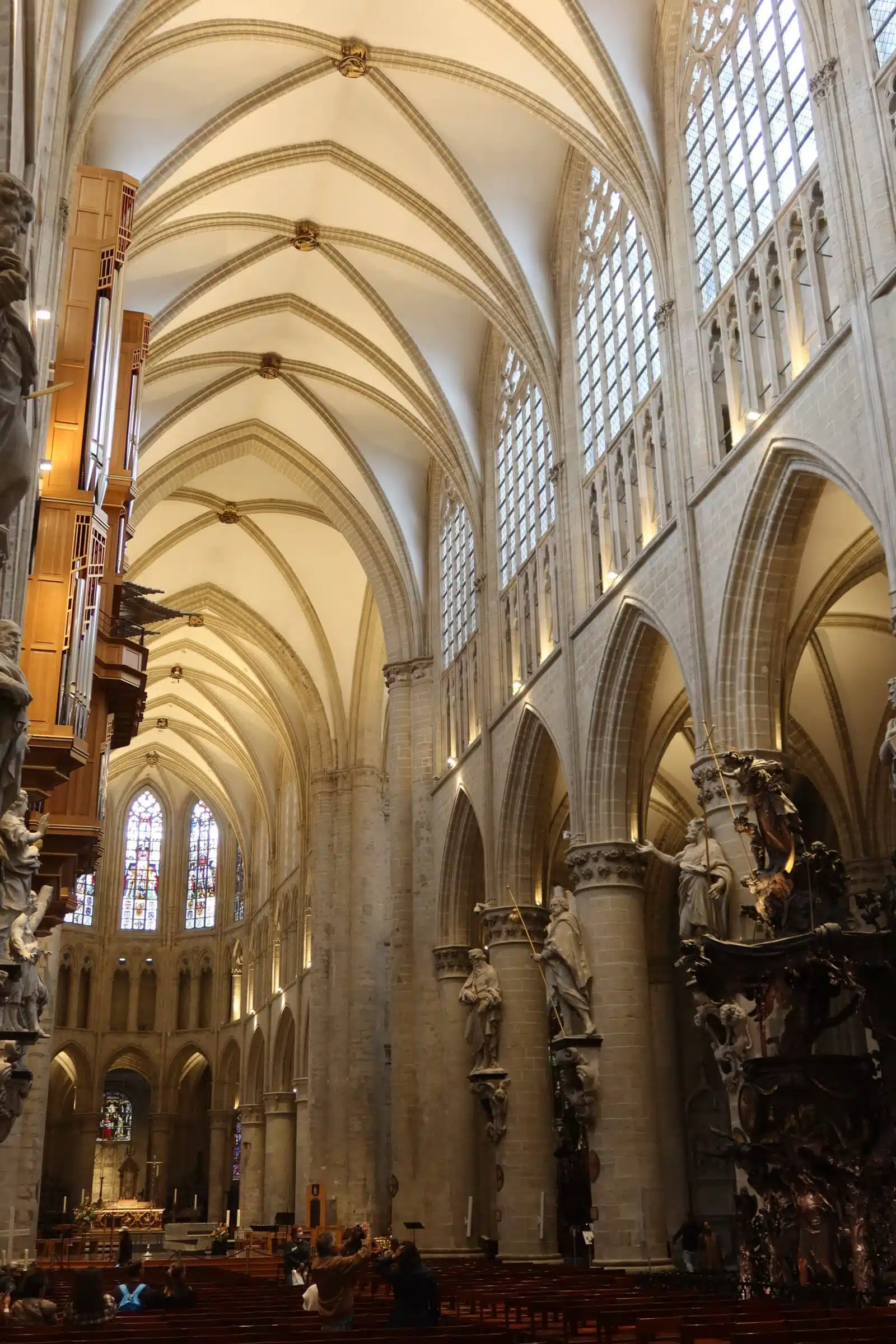
12/12/2026 – 15:00 – Lecture by Mr Hugo Claes – St Michael and St Gudula Cathedral, the restoration of a unique building dating back to the origins of Brabant Gothic architecture
Saturday 12/12/2026 (in Dutch)
Speaker: Mr Hugo Claes (architect, former director of the Restoration Department of the Buildings Agency).
“St Michael and St Gudula Cathedral, the restoration of a unique building dating back to the origins of Brabant Gothic architecture”
A look back at the latest major restoration work on Brussels Cathedral, which began in 1983 and was completed in 2000.
Buildings such as Gothic cathedrals are among the most important physical evidence of medieval social development in Western Europe. The construction of these buildings was made possible in part by significant economic and technical advances.
Innovative research techniques to study the stability of Gothic structures, in-depth studies on the history of construction and the latest implementation techniques have led to new insights and opened up new possibilities for the restoration of Brussels Cathedral.
Free admission
Restoration of the Cathedral by the Belgian Buildings Agency
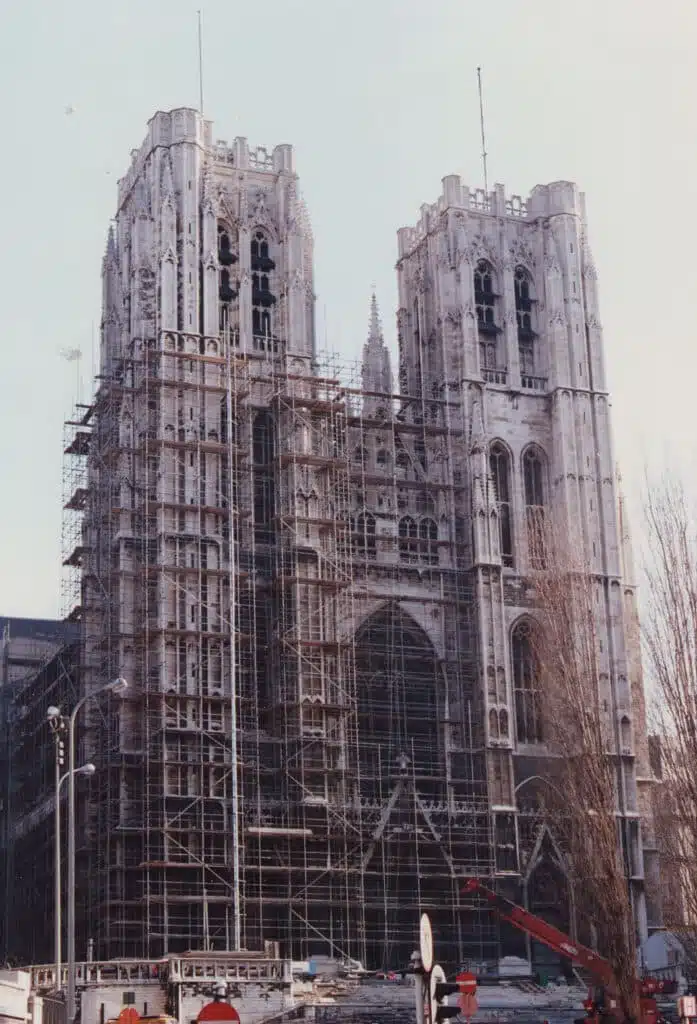
The Cathedral of St. Michael and St. Gudula in Brussels is a jewel of the Gothic architecture in our country and one of the most prestigious symbols of our cultural history.
In the 80’s and 90’s, the Belgian Buildings Agency carried out a large-scale restoration campaign on the Cathedral, allowing it to regain its former glory.
Restoration campaign led by the Belgian Buildings Agency
In 1981, the Belgian federal government commissioned the Belgian Buildings Agency to restore the Cathedral.
The Belgian Buildings Agency organised the works and had the necessary studies carried out. For the art-historical, architectural-historical, and archaeological aspects, as well as the scientific and technical research of the various construction materials, it relied on independent specialists, research laboratories and scientific institutions.
Because the Cathedral is protected as a national monument, the works were carried oud in close consultation with the Royal Commission of Monuments and Sites.
First phase of the restoration (1983–1990)
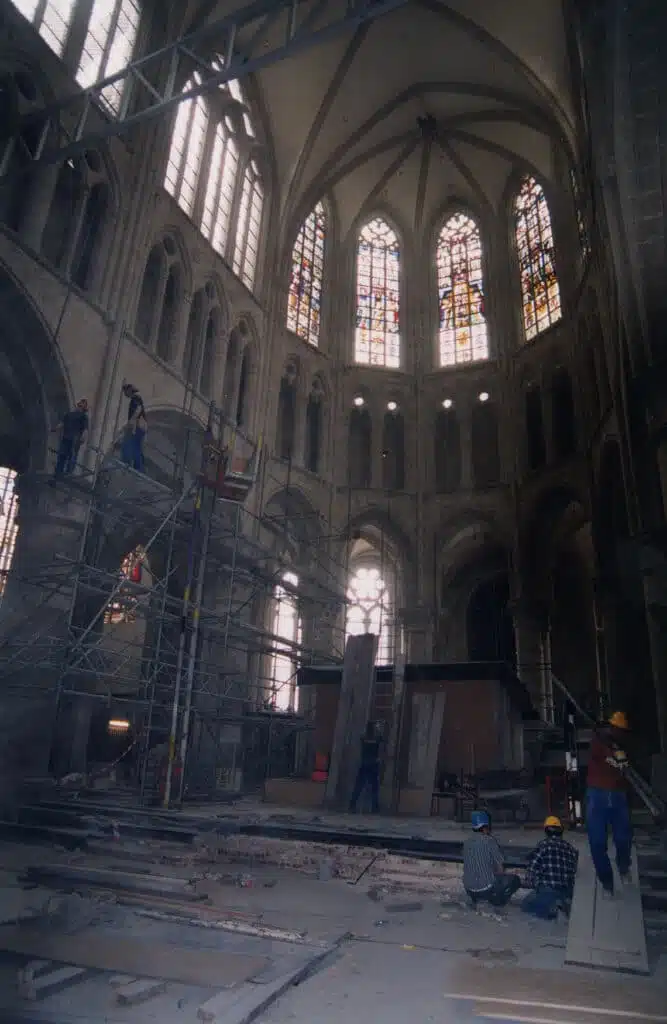
In the first phase, from 1983 to 1990, the nave and the aisles were restored, among other elements. The works included:
- – Restoration of the roofs.
- – Dismantling and reconstruction of the transept tower.
- – Restoration of the natural stone façades. These were weathered and in decay due to air pollution and weather influences (wind, rain, frost and thaw). Extensive structural reinforcements, stone repairs and cleanings were carried out.
- – Cleaning and repair of the natural stone masonry on the inside of the Cathedral.
- – Restoration of the vault caps.
- – Reconstruction of the floor.
- – Installation of a new heating system.
- – Restoration of the triforium and stained-glass windows.
- – Stabilisation and restoration of the flying buttresses and buttresses.

Second phase of the restoration (1990–2000)
In the second phase, from 1990 to 2000, the restoration works continued on the gable end and the east façade of the transept, the high choir, the ambulatory, the Chapel of the Holy Sacrament and the Notre-Dame Chapel, the baroque Maes Chapel at the back of the high choir, and the lower outbuildings such as the sacristies and the caretaker’s lodge.
In this phase, an inventory was also made concerning the damage to the stained-glass windows.
These were restored and fitted with external glazing to better protect them from damage and pollution. The works on the roof were also continued.
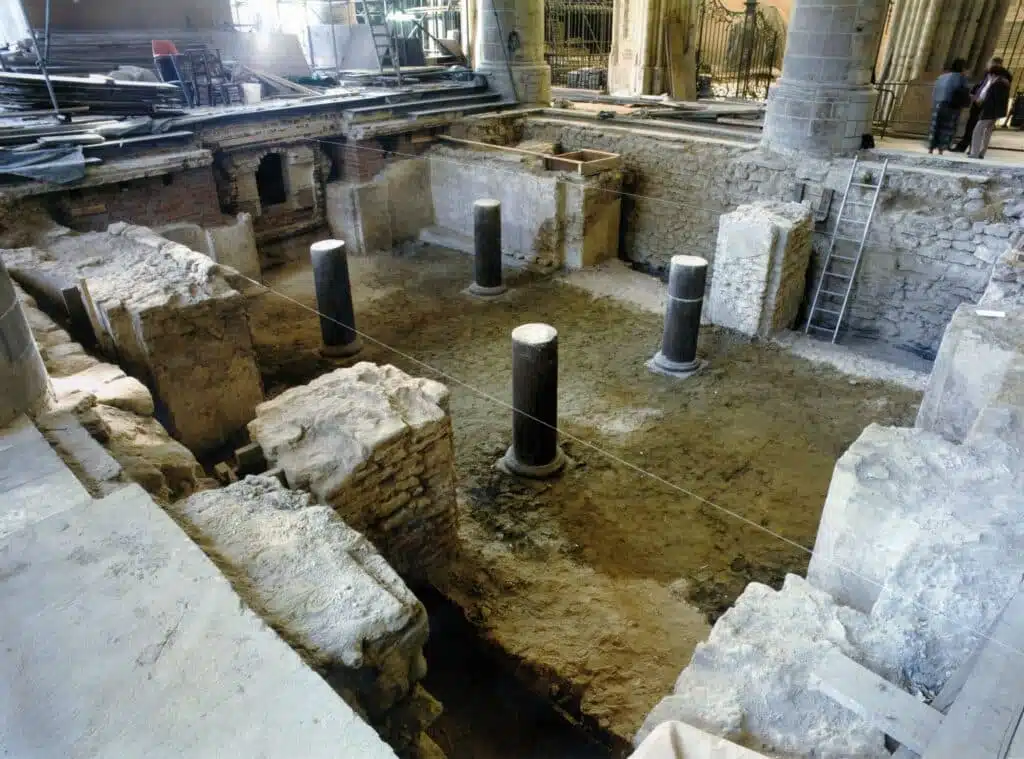
During the works, the foundations of the Romanesque collegiate church, which gave way to the current Gothic church from the 13th century onward, were uncovered. These were made accessible through two archaeological underground spaces (the crypt and the west façade).
The first major ceremony to be held in the Cathedral after the completion of the works was the wedding of King Philippe and Queen Mathilde on December 4th 1999.
Financing
The first sub-phase (1983–1987) was fully financed by the federal government. Subsequently, the costs were divided by Royal Decree between the Belgian Buildings Agency, representing the federal authority (60%), the City of Brussels (20%), the former province of Brabant (18.56%) and the province of Antwerp (1.44%).
After the completion of the restoration campaign, the responsibility for the maintenance of the Cathedral was transferred to the Church Council, the City of Brussels and the Brussels-Capital Region.